
No products in the cart.

If you’re greeted by a musty mini split smell every time your unit kicks on, you’re not alone. This is a common issue, especially after long periods of inactivity during cooler months. The good news? You can fix a mini split odor in under an hour and keep it from returning. In this blog, we’ll walk through what causes the smell, what the top-ranked YouTube video recommends, and how to go further with long-term solutions. New to mini splits? Start with What Is a Ductless Mini-Split Air Conditioner?
Why Mini Splits Smell Musty After Winter
Mini split systems, like a 12,000 BTU Ductless Mini-Split Air Conditioner, are known for energy efficiency and quiet operation, but they’re not immune to odor issues. During fall and winter, condensation in the evaporator coil or drain pan can stagnate, creating a breeding ground for mold and bacteria. This leads to a musty mini split smell that can impact air quality—learn more in Air Quality and Efficiency of a Ductless Mini-Split AC.
When the system powers on in spring or summer, this microbial growth gets pushed into the air, triggering allergies in sensitive individuals. For more on mold prevention, see How Mini Splits Can Help Prevent Mold Growth in Humid Climates.
What the Video Shows You
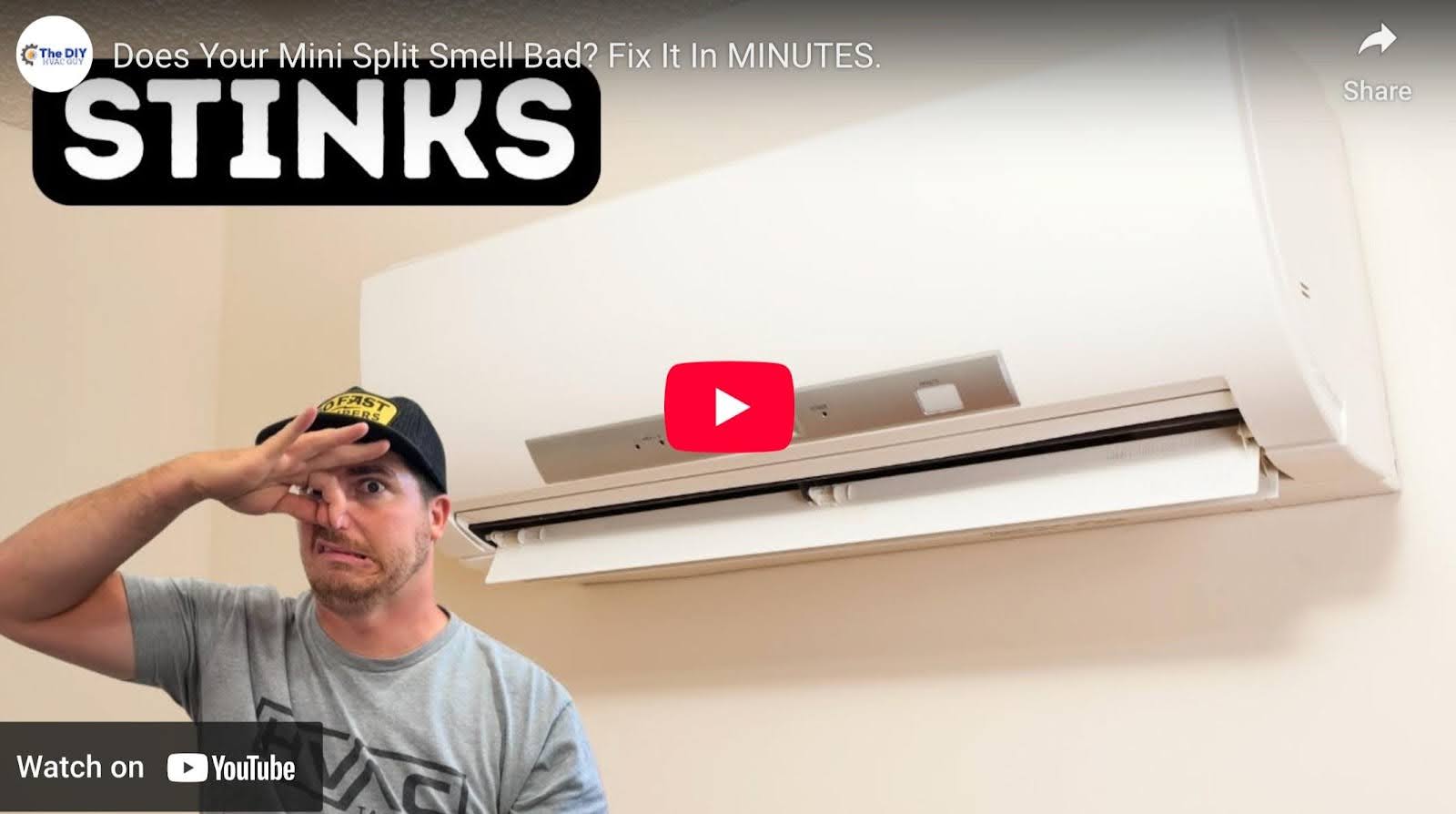
The video Does Your Mini Split Smell Bad? Fix It In MINUTES gives a solid, visual overview of a quick and effective fix. Here are the key takeaways:
- Flush the drain pan – Standing water is often the source of the odor. Use warm water, a mild detergent, or white vinegar to clean out the drain pan and flush away any gunk.
- Clean the drain line – Use a shop vacuum or pipe cleaner to clear clogs in the drain line. This ensures moisture drains properly and doesn’t stagnate inside the unit.
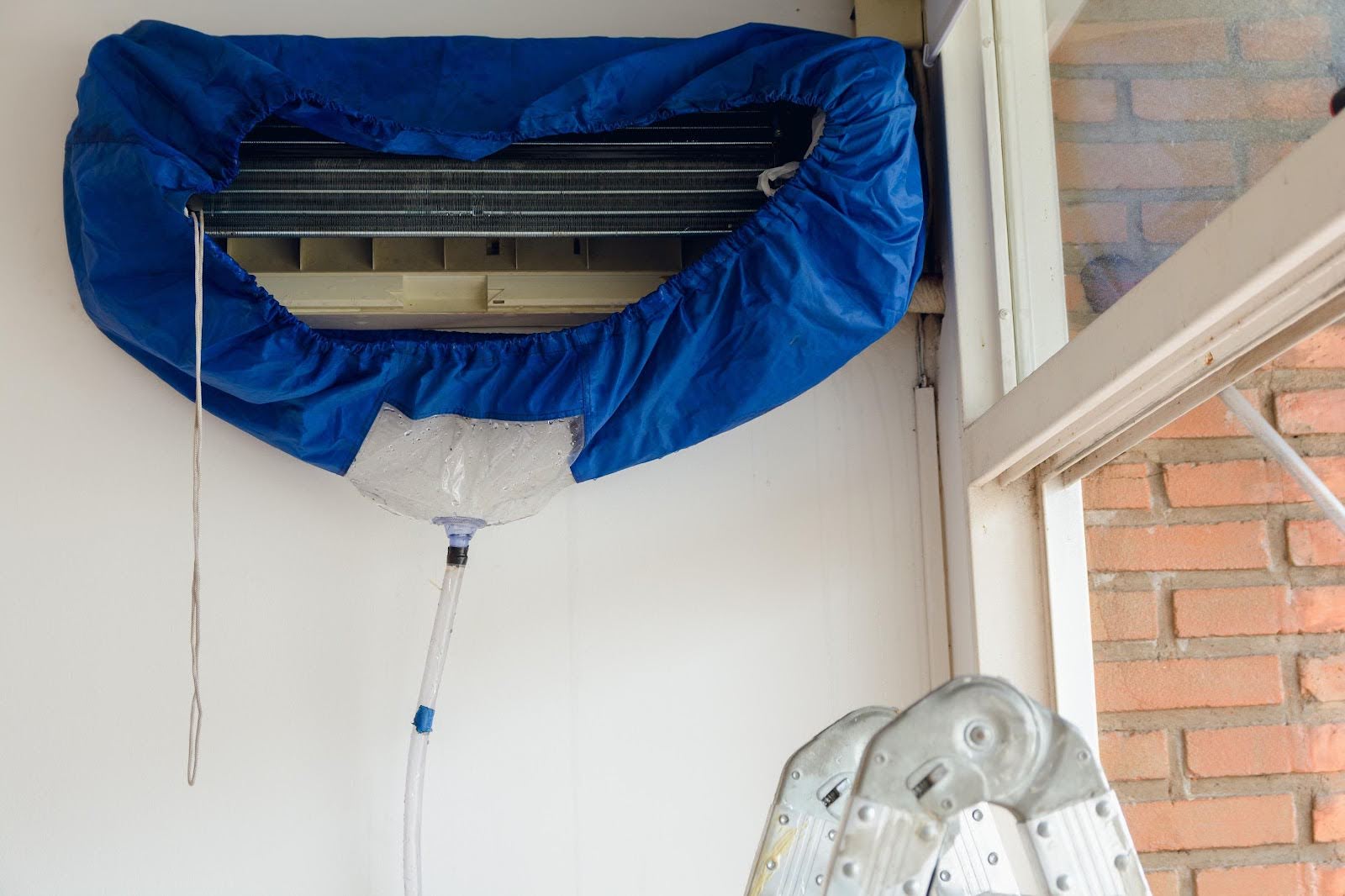
- Spritz the evaporator coil – A no-rinse coil cleaner helps kill bacteria and eliminate odor directly at the source. Be sure to follow safety guidelines and avoid spraying too heavily.
- Replace or wash your filters – Dirty filters not only block airflow but can also trap moisture and bacteria. Clean them every 30 days or replace if heavily soiled.
These steps can often restore fresh airflow quickly, but they may not be enough for deep-seated mold or repeat issues.
Pro Tips from Payless Mini Split
While the video gives a great starting point, our HVAC specialists recommend going the extra mile to ensure long-term freshness and better performance:
- Use a wet/dry vacuum on the drain pan and line to remove any hidden debris or sludge. This is especially useful in units that haven’t been cleaned in over a year.
- Apply a foaming coil cleaner designed for mini split systems. These products not only kill bacteria but also lift and carry away grime as they expand.
- Wear gloves and a face mask to avoid direct contact with mold spores, particularly if the odor is strong or you see visible buildup.
- After cleaning, run the system on fan-only mode for 30 to 60 minutes to allow interior components to dry completely. Moisture left inside can undo all your work.
- If the smell comes back quickly, it’s a sign of deeper buildup in the blower motor or hidden mold within the unit’s internal ducts. Call a professional at that point.
Preventing That Musty Smell from Coming Back
Eliminating the odor is important, but preventing it ensures you won’t face the same problem again next season. Here’s how to keep your mini split fresh year-round:
- Use “dry” or “fan” mode after cooling cycles – This helps evaporate residual moisture left behind in the coils.
- Clean filters monthly, especially during peak summer and winter usage. Most filters are washable, just make sure they’re fully dry before reinstalling.
- Get a seasonal tune-up every spring before using your AC and every fall before switching to heat. Professionals will inspect and clean parts you can’t reach on your own.
- Install a UV light kit in or near the drain pan area. UV lights destroy mold and bacteria continuously, keeping the system cleaner between service visits.
- Make sure your mini split is properly sloped during install so water drains completely. Poor installation is a hidden cause of persistent moisture and smells.
Should You Call a Pro?
While many of these solutions can be handled with basic DIY tools, there are times when calling an HVAC technician is the smart move. Consider professional service if:
- The smell returns within a week or two despite cleaning
- You see black or green mold on the coils or vents
- Water is leaking or pooling under or near the unit
- You or your family are experiencing worsening allergies or respiratory symptoms
A technician can perform a deep coil cleaning, inspect the blower fan, test the drainage system,
and even sanitize with EPA-approved products.
Final Thoughts
That YouTube video is a great visual guide to get you started, and it’s why it ranks so well on Google. But with the extra steps and prevention tips we’ve added here, you can eliminate odors and enjoy better air quality year-round.
If your unit needs deeper cleaning, repair, or replacement, we’re here to help.
👉 Contact us today for expert guidance, mini split accessories, or to schedule a professional inspection.


 English
 Arabic